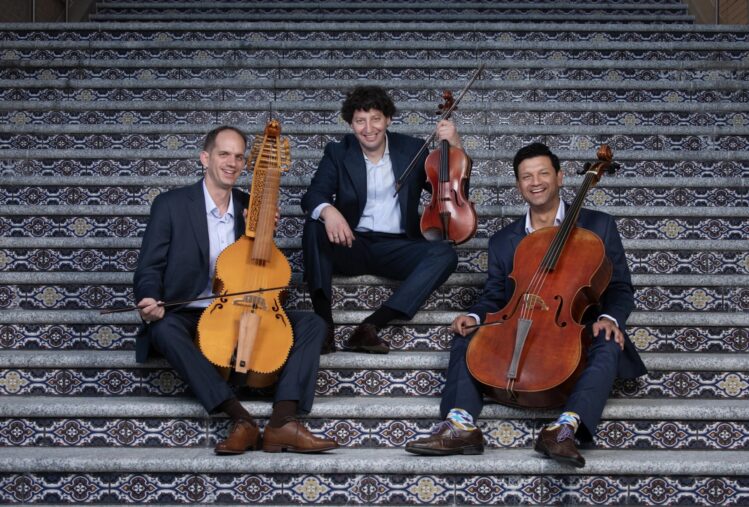
The Valencia Baryton Project performs on viola, baryton and cello in a concert featuring works by Haydn and contemporary composers. The trio performs Thursday, Sept. 10, at 7:30 p.m. at UNO’s Strauss Performing Arts Center.

By Gabriel Escalera
A Rare Baroque Instrument Comes to Omaha
August 26th, 2026
An instrument rarely seen or heard in modern concert halls is coming to Omaha.
The Valencia Baryton Project will bring the unusual baryton to the University of Nebraska at Omaha for a free concert featuring music from the Baroque and Classical periods.
The baryton was popular in Europe during the 17th and 18th centuries, particularly among aristocrats. Joseph Haydn was one of its most notable composers, writing 123 trios for baryton, viola and cello.
UNO string program director Mary Perkinson has been working for years to bring the project to Omaha. The group’s founder and baryton player, Matthew Baker, first contacted her before the COVID 19 pandemic.
The wait is finally over.
The baryton resembles the viola da gamba, but it has a distinctive design. Along with its primary strings, the instrument has a second set of resonating strings underneath the fingerboard. The player can bow one set of strings while plucking the others with the thumb.
It is, in effect, two string instruments played at once.
The Valencia Baryton Project will also recreate some of the sound of Haydn’s era through historical performance practices. The musicians will perform using gut strings and baroque bows, and they will tune to A 415 rather than the modern standard of A 440.
The result is expected to be a warmer and different sound from what audiences typically hear in a modern classical performance.
The Valencia Baryton Project performs Thursday, Sept. 10, at 7:30 p.m. at UNO’s Strauss Performing Arts Center. The concert is free and open to the public.
Earlier that day, the musicians will offer a more informal introduction to the instruments during UNO’s Bach’s Lunch series at noon. Audiences will have an opportunity to see the baryton, viola and cello up close and hear from the musicians.
For anyone curious about an instrument that has largely disappeared from the modern concert stage, it offers a rare chance to hear the sound of another musical era brought back to life.

