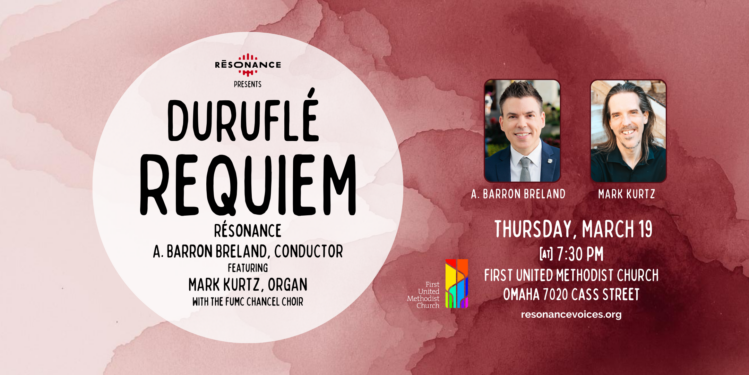
Conductor Barron Breland and organist Mark Kurtz lead a performance of Maurice Duruflé’s Requiem at First United Methodist Church in Omaha.

By Gabriel Escalera
Pipes, Wind, and Memory: The Restoration of a Living Instrument Short Excerpt:
March 16th, 2026
Inside First United Methodist Church, thousands of pipes sit hidden behind the walls.
Some stretch as tall as a room, 16 feet of carefully shaped metal. Others are no bigger than a pencil, designed to produce sounds so delicate they almost shimmer. Together, they form a pipe organ that has been part of the church’s voice since 1957.
Now, after more than a year of meticulous restoration, that voice is almost ready to return.
“It goes all the way from those massive pipes down to pipes that are maybe just the size of a pencil or smaller,” says Mark Kurtz, Director of Music Ministries at the church. “Those make delicate, tinsely sounds.”
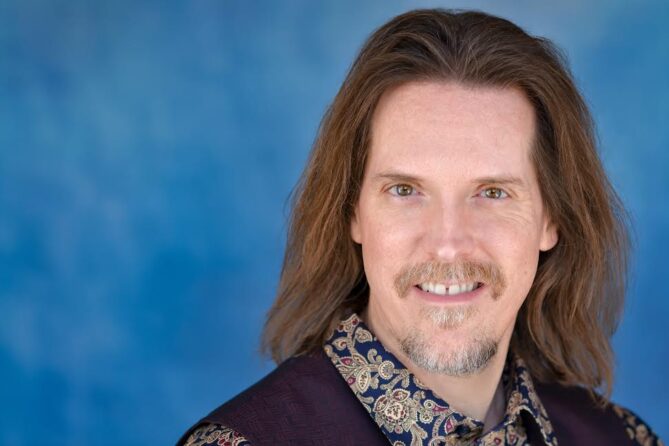
Mark Kurtz, Director of Music Ministries at First United Methodist Church, 2018.
Kurtz knows the instrument intimately. For years, he has studied its capabilities, its quirks, and its history. And what he sees is something rare, not just in Omaha, but anywhere.
A Design Meant to Speak Many Languages
The organ was built in the tradition of the American Classic style, a concept pioneered by G. Donald Harrison.
At the time, it was a radical idea.
“What if we could play music from all different time periods,” Kurtz explains, “German Baroque, French Romantic, even 20th-century theater organ music, and have all of those sounds within one instrument?”
That philosophy is still visible at the console, the organ’s command center, which Kurtz calls the cockpit. Its 98 stop knobs are labeled in multiple languages, each one unlocking a different tonal world.
Over the decades, the instrument has grown. It was expanded twice, most recently by the Bedient Pipe Organ Company. When the current work is complete, the organ will include 75 ranks, 75 distinct sets of pipes, each with its own voice.
Kurtz compares it to something simple and familiar.
“It’s like the 64-color Crayola box,” he says. “Each stop is a different color. Some are sweet and lush. Others are bright and sparkling.”
A Life in Music, A Return to the Organ
Kurtz didn’t begin his musical life at the organ, not exactly.
He grew up in North Dakota, the son of a Lutheran pastor. It was his mother who nudged him toward the instrument, offering a practical bit of advice that stuck.
“If you learn to play the organ,” she told him, “you could have a church job someday.”
From there, his path expanded far beyond the church.
He studied composition at the University of North Carolina School of the Arts and built a career that bridges multiple worlds, classical music, theater, and new works for young audiences.
Last year, one of his musicals premiered at the The Coterie Theatre, based on a book by Sonia Sotomayor.
And yet, he keeps returning to the pipe organ.
Not as a relic, but as something alive.
“This is all real wind,” Kurtz says. “Every pipe was crafted by hand. There’s just so much life and vitality in an instrument like this.”
A Sound Reborn
The restoration is nearly complete. Just one rank of pipes remains to be installed, a French chrome horn that will add yet another layer to the instrument’s voice.
To celebrate, the church is preparing a concert that brings together organ, choir, and community.
Kurtz will perform alongside organist Marie Myers and the Omaha-based ensemble Resonance.
The program includes the luminous Requiem, music by Aaron Copland, and a choral work Kurtz composed himself, written years ago in honor of Myers, who will now perform it on the fully restored instrument.
For Kurtz, the moment carries a quiet weight.
It’s a homecoming. A debut. And a rare chance to hear what this instrument, this living system of pipes, wind, and craftsmanship, can truly become.
Soon, after more than a year of silence and careful work, it will breathe again.
And when it does, the sound won’t just fill the room.
It will carry decades of memory with it.

