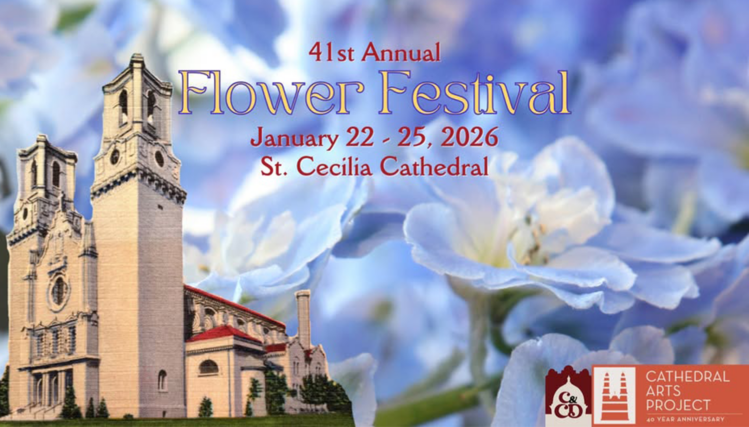
The front of the Omaha cathedral appears beneath a blue, flower filled sky in an image for the Cathedral Arts Project’s annual Flower Festival. Image courtesy of the Cathedral Arts Project.

By Gabriel Escalera
The Cathedral Flower Festival Brings Spring to Omaha’s Winter
January 9th, 2026
For more than four decades, the Cathedral Flower Festival has transformed winter in Omaha into something quietly extraordinary.
Each year, the cathedral becomes a space where flowers, music, art, and architecture come together, filling the coldest months with color, fragrance, and sound. What began as a modest winter project has grown into a large-scale cultural event that draws thousands of visitors and involves dozens of artists, florists, and performers.
Twenty-three florists arrive to transform individual spaces inside the cathedral, each creating a floral installation inspired by a work of art and by the festival’s annual theme. The flowers themselves travel long distances, arriving from places such as Bogotá and Holland before becoming part of a temporary indoor landscape that exists only for a single weekend.
But the festival is only one part of a much larger vision. The Cathedral Arts Project, which produces the festival, has spent more than forty years building a cultural presence in Omaha that extends beyond the cathedral walls. A gallery, gift shop, and café operate year-round, and the organization hosts a wide range of events, from folk dancing and classical concerts to community art walks through the Joslyn Castle Creative District.
Music plays a central role during the festival itself. Over three days, performances fill the cathedral with voices and instruments representing a wide range of ages, styles, and cultural traditions. Student choirs, conservatory musicians, and local artists share the same space, creating a program that reflects both community participation and artistic excellence.
Behind the scenes, the festival is a carefully choreographed effort. Installation begins early in the week, with major work taking place over several days before the public ever enters the space. By the time the festival opens, the cathedral has been transformed into a living exhibition that blends visual art, architecture, and sound into a single experience.
The festival remains free and open to the public, supported by a mix of county funding, business sponsorships, and individual donations. That commitment reflects the organization’s belief that art should be accessible, shared, and experienced collectively.
Each year, the festival also honors individuals who have helped sustain and support this vision. The recognition serves as a reminder that cultural institutions are not static, but are built and maintained by communities that value creativity, gathering, and generosity.
In the end, the Cathedral Flower Festival offers something simple and rare. It offers a moment of beauty in the middle of winter, a space for reflection and joy, and a reminder that art has the power to change not just rooms and buildings, but how people experience time, season, and place.
More information is available at cathedralartsproject.org. The 2026 Flower Festival is free and open to the public.

