Welcome to the KVNO Arts Calendar!
— dedicated to promoting the growth and appreciation of the arts in the Omaha community.

- This event has passed.
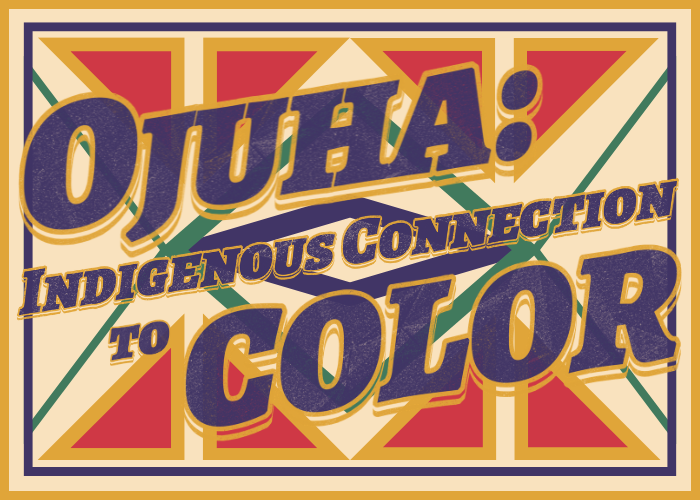
Ojuha: Indigenous Connection to Color
For hundreds of years, Native American tribes of the Plains, Plateau, and Basin regions crafted containers from hard animal skin. This untanned, natural skin—sourced from deer, elk, and buffalo—is known as rawhide.
The designs painted on these containers were representational, geometric, and abstract, each rich in meaning and unique to specific regions and tribal nations. They told creation stories, conveyed star knowledge, expressed spiritual beliefs, and embodied virtues and values. Certain designs were particular to individual Tribal Nations, Indigenous families, women’s guilds, and men’s societies across the different regions.
Natural paint pigments were derived from berries, rocks, and plants, then mixed with hide glue. The finished containers were coated with a solution made from plant starches, gelatin, and gum fiber to preserve and protect them.
These vessels served a wide range of purposes: holding spiritual items, feathers, food, clothing, medicines, tools, weapons, and other everyday essentials.
For centuries, these containers have been misidentified as “parfleche,” a term used by French fur traders to describe Native American shields, also made of rawhide. The word parfleche literally translates as “stop arrow.” Over time, the term was broadly applied to any item made from rawhide, a misidentification that persists to this day.